Expert Insight by Dalyal Copin, R&D Environmental Impacts Engineer at UBSIDE
What does biodegradability really mean?
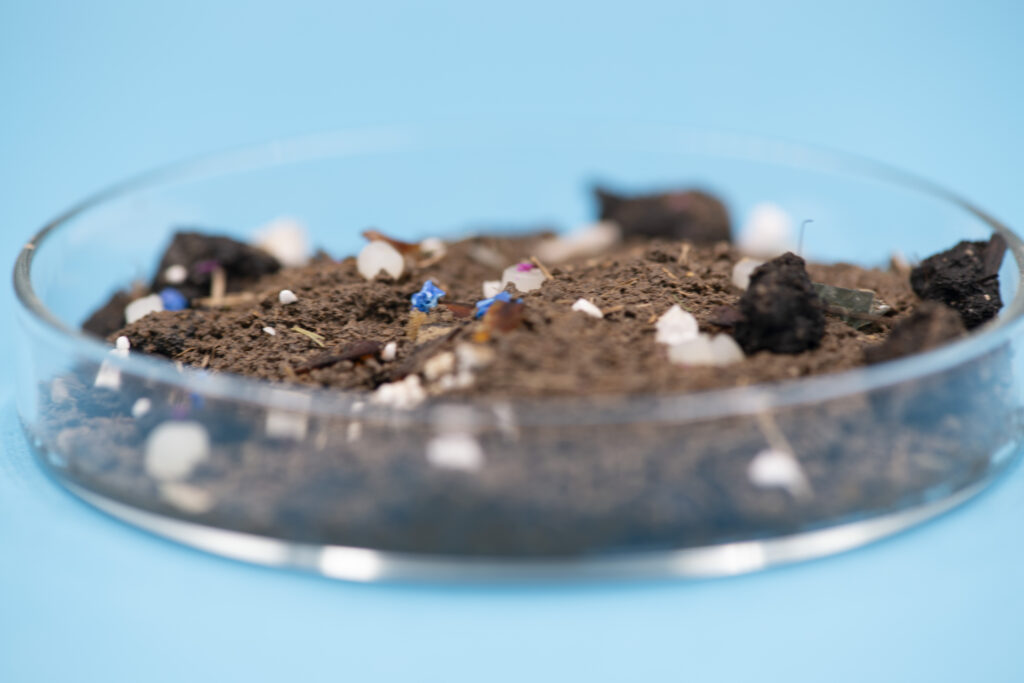
Biodegradability refers to the ability of a material or substance to be broken down by microorganisms into simple products such as CO₂, CH₄, water, and biomass. Contrary to common belief, biodegradability is not a universal property in all environments. A material might biodegrade in industrial composting conditions but may not break down in seawater or might degrade very slowly in natural soil. This process depends entirely on the environment, its microbiome, temperature, oxygen levels, and physico-chemical characteristics.
Understanding this environmental dependence is essential to avoid confusion between biodegradability, compostability, disintegration, and simple fragmentation.
Easy biodegradation vs. ultimate biodegradability
There are key differences between two kinds of biodegradation assessments:
Easy biodegradation
This type of biodegradation is tested in aqueous environments under optimized conditions that maximize microbial activity. These OECD-developed tests can also apply to materials with low solubility or dispersion. A positive result in easy biodegradation means the material breaks down quickly under these optimal conditions, which does not necessarily reflect real natural environments.
Ultimate biodegradability
Ultimate biodegradability measures the complete mineralization of a material under standardized aerobic or anaerobic conditions, tracking the production of carbon dioxide (CO₂) or methane (CH₄). These tests better reflect real decomposition processes in compost, soil, or digesters.
Does a Material’s Biological Origin Affect Biodegradability?
There is a common misconception that materials derived from biological sources (bio-sourced) are automatically biodegradable. In reality:
 Bio-sourced refers only to the material’s origin.
Biodegradable refers to the material’s end-of-life breakdown behavior.
A plant-derived polymer can be highly stable and non-biodegradable in the environment, while a fossil-based material might biodegrade effectively. Therefore, scientific evaluation using standardized testing is essential to accurately characterize a product’s biodegradability, regardless of where it comes from.
How Regulations Are Shaping Biodegradation Claims
Biodegradability is not just a scientific concept—it is increasingly regulated to prevent misleading environmental claims. In Europe:
- Regulatory frameworks now define what can legitimately be communicated regarding biodegradability.
- Future rules like PPWR (Packaging and Packaging Waste Regulation) will tighten requirements around compostability and environmental claims.
- French law AGEC already restricts labels such as “biodegradable” or “environmentally friendly.”
- The Green Claims regulation aims to ensure environmental claims are backed by transparent scientific evidence.
- International standards (e.g., EN 13432 or OECD tests) guide how biodegradability is measured across different environments.
As a result, clear and precise communication about biodegradability—specifying environmental conditions and testing methods—is becoming mandatory for products marketed with such claims.
🎯 The UBSIDE team supports you in:
- choosing the right tests,
- anticipating regulatory requirements,
- structuring credible and compliant communication.
Note: In an upcoming communication, we will clearly guide you through regulatory requirements to help you understand who is concerned, which tests to select, and how to avoid misleading claims—so you can secure your market launches with confidence.