Behind every technological breakthrough lies a field reality. For decades, the evaluation and design of personal ballistic protection followed a single standard, based exclusively on male morphology. In the field, for female personnel in the armed forces, this uniformity resulted in a daily compromise: flat or minimally curved plates that meant discomfort, rigidity, and restricted freedom of movement.
This is where the story of a collective success begins. The story of a challenge that is both human and scientific: making ballistic protection more inclusive, without ever compromising on safety. Unveiled to great acclaim at the Eurosatory 2026 exhibition, this project embodies the core mission of UBSIDE: transforming academic research into breakthrough innovations ready for the field.
The spark: When an ecosystem rallies for a common cause
No great story is written alone. To bring this complex-geometry composite ballistic demonstrator to life, it was necessary to bridge perspectives and unify skills within a unique innovation ecosystem.
It all started in early 2026 under the impetus of the Carnot MICA institute, a true behind-the-scenes catalyst that connected the potential of UBSIDE (a business unit of the University of South Brittany, operated by SATT Ouest Valorisation) with the expertise of the French-German Research Institute of Saint-Louis (ISL).
This synergy is the beating heart of our success:
- UBSIDE applied its cutting-edge know-how in materials engineering and automated manufacturing.
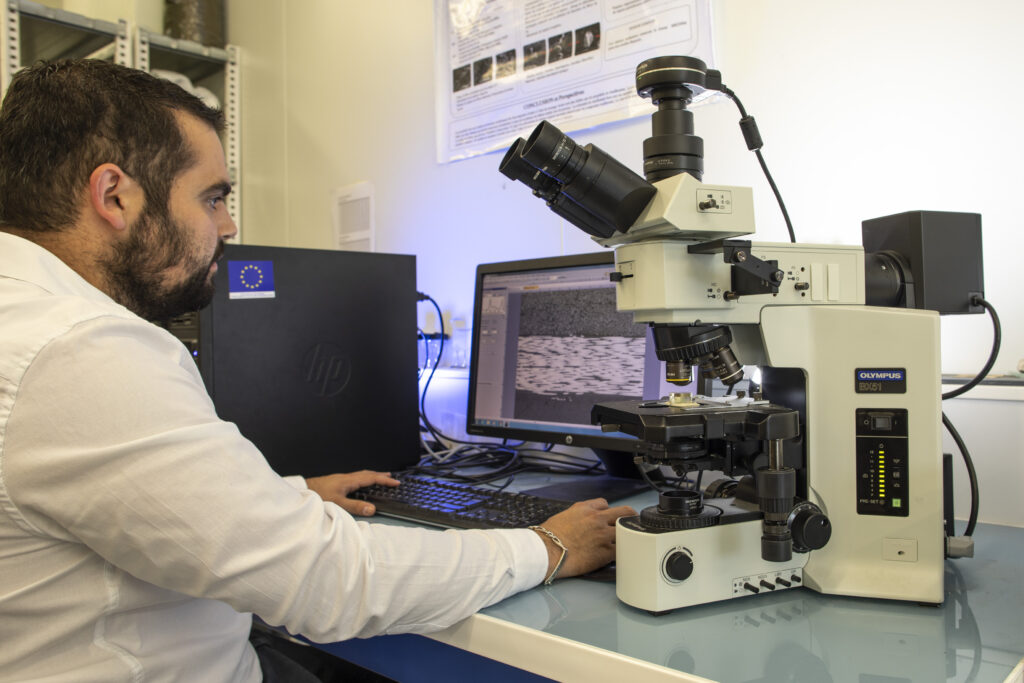
- ISL provided its unique infrastructure in Europe to subject the material to extreme testing (ballistic impacts, crash tests, blast effects).
Together, we turned a necessary theoretical idea into a tangible reality.
The technological challenge: Mastering the laser to shape the impossible
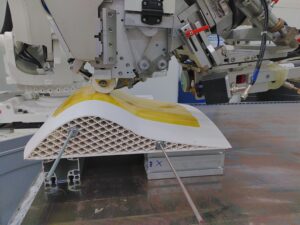
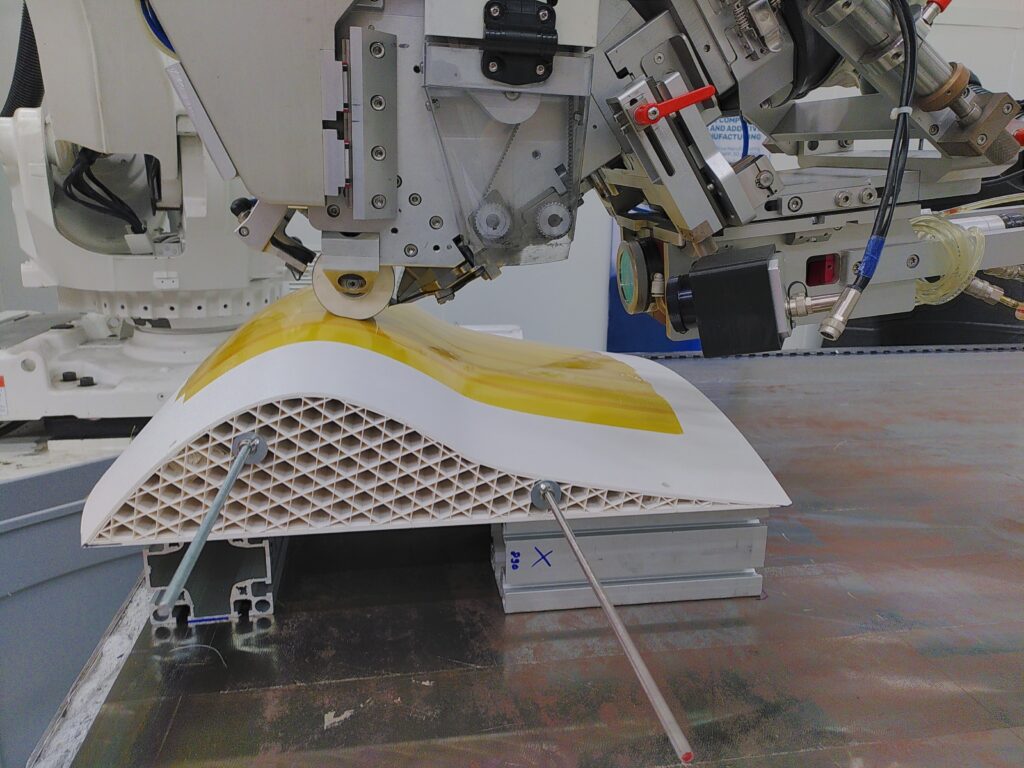
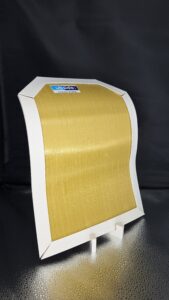
To perfectly fit the female anatomy and provide continuous protection for vulnerable, articulated zones (such as shoulders), we had to design structures with complex curvatures. This was a true puzzle for our engineers, as manipulating ultra-resistant materials without altering their protective properties requires high-level precision.
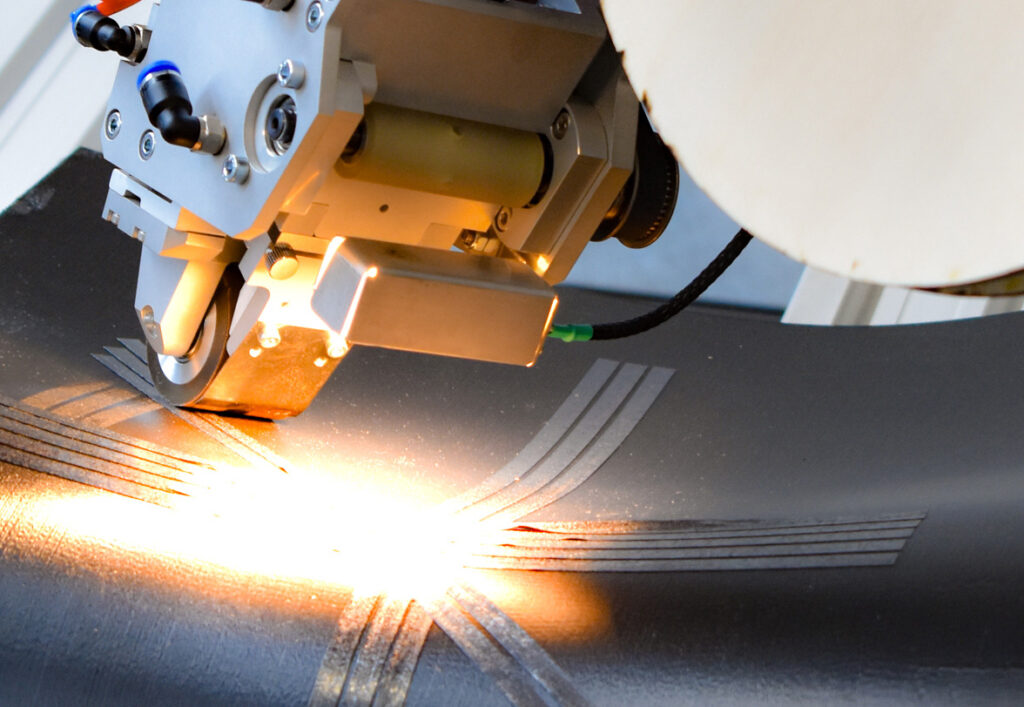
It was in our laboratories that the magic of AFP robotics (Automated Fiber Placement) took over. Our robot automatically and surgically deposits bands of composite materials directly onto complex geometric molds, while an integrated laser system ensures instantaneous consolidation.
The hurdle we had to clear? The unprecedented combination of para-aramid fibers (like Kevlar®) and a thermoplastic resin. By nature, this resin is incompatible with laser-based robotic deposition. UBSIDE’s technical teams developed a custom treatment for the thermoplastic matrix.
By making what seemed impossible “processable,” UBSIDE paved the way for lighter, more ergonomic armor with high performance against projectiles and bladed weapons.
A step toward the future: from personal protection to high-end markets
This success, validated by the rigorous testing at ISL, goes beyond personal protection. It validates a future-proof industrial process and writes the first chapters of new industrial success stories for UBSIDE and its partners.
Mastering this breakthrough technology now opens doors to strategic, high-value-added segments:
- Structural Ballistic Radomes: Thanks to the properties of the composite materials used—which allow radio frequency signals to pass through—we can design armor for naval or military vehicles that protects sensitive electronic components while ensuring fluid communications.
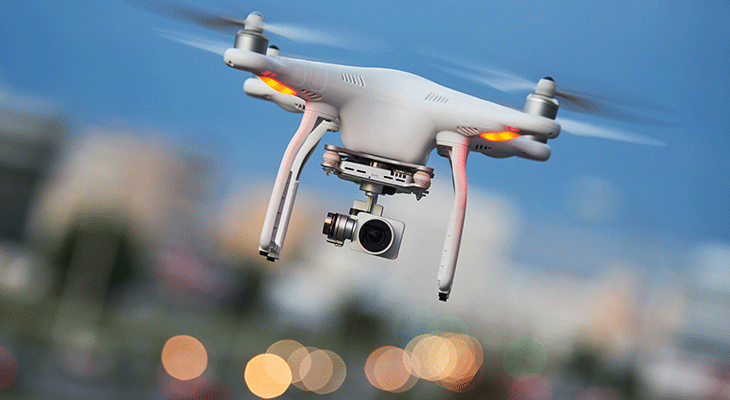
- Defense Aeronautics and Drones: Whether it’s fitting the aerodynamic lines of a helicopter cockpit or lightening the onboard armor of tactical drones against interception debris, UBSIDE’s geometric flexibility becomes a major asset.
 Innovating for the field, together
The Eurosatory 2026 demonstrator is not an end in itself; it is a successful proof of concept that is ready to scale. At UBSIDE, our greatest pride is co-developing the future with our industrial partners, guiding them from prototyping through to life-cycle analysis.
This ballistic success is proof that by listening to the real needs of the field and uniting the forces of research, we can design technologies that protect lives, improve the daily lives of personnel in the field, and redefine industrial standards.