The fight against invisible pollution has become a top priority in France’s environmental strategy. At the heart of this legislative arsenal, the Anti-Waste for a Circular Economy Law (AGEC Law) imposes radical transformations on both manufacturers and consumers. In 2026, crucial new milestones have been reached, particularly regarding intentionally added or released microplastics.
For businesses, compliance is no longer optional but a lever for performance and transparency.
UBSIDE breaks down the challenges, standards, and operational obligations of the AGEC Law in the face of the microplastics challenge.
1. Why is the AGEC Law Targeting Microplastics in 2026?
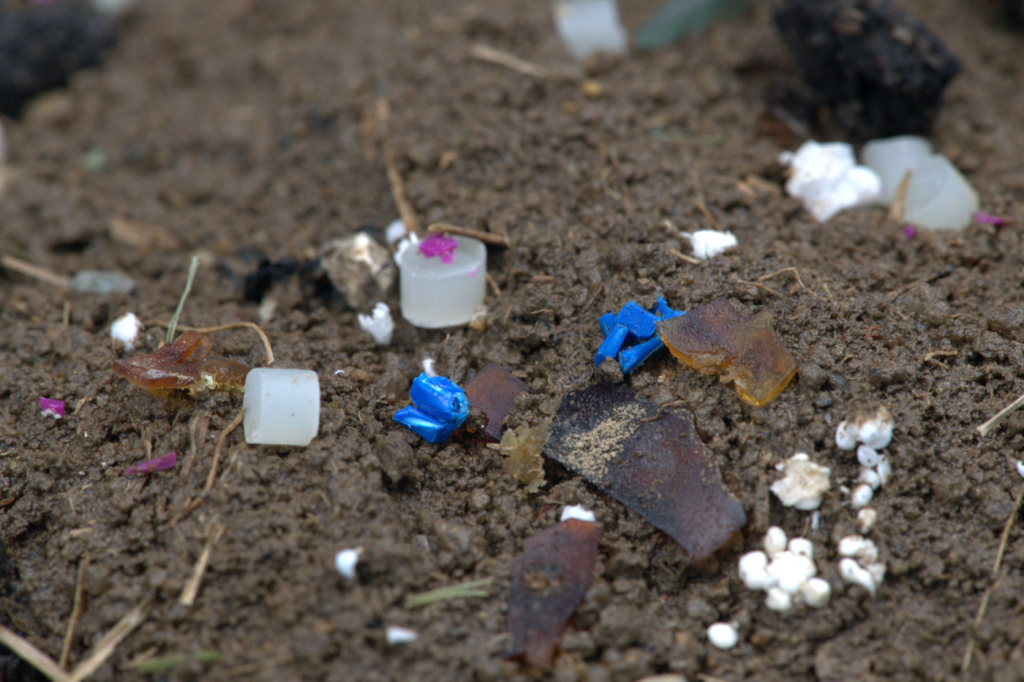
Microplastics—particles smaller than 5 mm—represent a systemic threat. Unlike macroscopic waste, they infiltrate food chains and groundwater tables, making their treatment highly complex.
The AGEC Law structures its action around two categories:
- Intentional microplastics: Intentionally added to formulations (cosmetics, detergents, fertilizers).
- Unintentional microplastics: Originating from product wear and tear (tyres, synthetic textiles) or industrial losses (plastic pellets).
The stakes are high: once released into the environment, these polymers are virtually impossible to recover. The law therefore bets on prevention at the source.
2. AGEC Law 2026: The New Regulatory Course for Businesses
2026 represents the culmination of an ambitious transition timeline.
2.1 The Ban on Microplastics in Rinse-Off Cosmetics (January 1st, 2026)
This is the most impactful change for the health and beauty sector this year. Under Article 82 of the AGEC Law, placing rinse-off cosmetic products containing intentionally added microplastics on the French market has been formally prohibited since January 1st, 2026.
- Products concerned: Shampoos, shower gels, rinse-off makeup removers, hair coloring products.
- The threshold: A concentration greater than 0.01% by mass.
- French anticipation: While the European REACH regulation schedules a similar deadline for 2027, France is accelerating the pace to protect its aquatic ecosystems more quickly.
2.2 Textile Microfiber Filtration: An Obligation Pending Decree
Article 79 of the AGEC Law initially stipulated that as of January 1st, 2025, every new washing machine must be equipped with a microfiber filtration device. However, the operational reality is more nuanced: the implementing decree specifying the technical terms, efficiency thresholds, and control methods has still not been published to date.
In the absence of this binding regulatory framework, there is no enforceable legal obligation for manufacturers in 2026. Currently, integrating microplastic filters is more of a voluntary initiative and a marketing argument for pioneering brands than a matter of strict compliance.
For companies in the sector, the stakes remain high: anticipating this future technical standard to avoid a brutal overhaul of their production lines when the decree is published.
2.3 The End of Oxo-Degradable Plastics and the Phase-Out of Disposables
A distinction must be made between two flagship measures of the AGEC Law which, although contributing to the same goal, follow different timelines and logics:
The eradication of oxo-degradable plastics (Since 2021): Often wrongly presented as an ecological solution, these plastics actually fragment faster into invisible microplastics under the effect of oxidation. Placing them on the French market has been banned since 2021. This measure has eliminated a major source of “programmed pollution” that was contaminating composting and recycling streams.
Plastic reduction in cups (2026 Target): In line with the phase-out of single-use plastics (with a target of zero disposable plastic by 2040), cups containing plastic, even as an internal coating, are subject to increasingly severe restrictions. The objective for 2026 is to trend toward a near-zero residual content, driving manufacturers toward 100% paper alternatives or sustainable reuse solutions.
3. Standards and Regulations: The AGEC Law and REACH Regulation Duo
France is acting as a pioneer, but its framework is increasingly aligning with European directives.
3.1 REACH Regulation (EU) 2023/2055: European Harmonization
Adopted in 2023, this European regulation supports the ambitions of the AGEC Law by harmonizing technical definitions across the EU.
- Strict definition: It targets synthetic, solid, insoluble, and non-biodegradable microparticle polymers.
- Complementarity: While the AGEC Law already banned rinse-off cosmetics in early 2026, REACH will extend this ban to leave-on products (makeup, lipsticks) and detergents between 2027 and 2035.
3.2 Industrial Plastic Pellets (IPP) Management
Since 2023, industrial sites handling plastic pellets must be equipped with loss-prevention systems (containment bunds, filtration systems). In 2026, compliance audits are becoming recurring to ensure that “zero loss” is an operational reality verifiable by the authorities.
4. 2026: A Pivot Year for “3R” Targets and PFAS
Beyond microparticles, 2026 marks a turning point for national strategy:
- The 3R Target (Reduction, Reuse, Recycling): The end of 2026 marks the close of the evaluation period for the target of a 20% reduction in single-use plastic packaging, at least half of which must come from reuse.
- The PFAS Law: In parallel with the AGEC Law, new French legislation has banned per- and polyfluoroalkyl substances (PFAS) in cosmetics, clothing, and ski wax products since January 1st, 2026, to reinforce the chemical safety of consumer goods.
5. How to Achieve Compliance?
To navigate this regulatory landscape, companies must adopt a proactive approach:
- Formulation audit: Analyze Safety Data Sheets (SDS) to identify synthetic polymers under 5 mm.
- Textile eco-design: For fashion brands, favor weaves that reduce fiber shedding or switch to natural materials.
- Traceability and labeling: The AGEC Law also mandates better consumer information regarding hazardous substances and the proportion of recycled content.
- R&D and alternatives: Invest in bio-based and biodegradable alternatives (cellulose, crushed fruit pits for exfoliants).
6. Outlook: Toward a Global Plastics Treaty?
As France consolidates the application of the AGEC Law in 2026, eyes are turning toward international negotiations. The goal is to achieve a binding global framework that would align with the demanding standards already in place in France.
Conclusion: UBSIDE Expertise for Your Transition
Microplastics regulation is a major technical and legal challenge. Anticipating the standards of the AGEC Law does not only prevent financial penalties; it is also a major selling point for consumers who are increasingly attentive to product composition.
UBSIDE supports you in understanding these regulatory challenges and implementing sustainable solutions. Contact us! Contact us !
Frequently Asked Questions (FAQ)
What are the penalties for non-compliance with the AGEC Law?
Administrative fines can reach up to €15,000 for a legal entity, not to mention the impact on brand reputation and potential product recalls from the market.
What is an “intentionally added” microplastic?
These are synthetic polymer particles voluntarily integrated into a product to fulfill a specific function (texture, exfoliation, controlled release of substances).
Is the washing machine filter mandatory on older models?
No, the obligation only applies to new appliances placed on the market since January 1st, 2025. However, adaptable external filter solutions exist for individuals wishing to reduce their footprint.